



Starting therapy is a big step, and many people find the first few weeks the hardest. If you searched for CPAP for beginners or how to get used to CPAP, this guide walks you through what to expect in your first 30 days and how to make the adjustment easier. It is general information, not a substitute for your doctor’s advice.
Why the first month feels difficult
Sleeping with a mask and a gentle stream of air is unusual at first. It is common to feel self-conscious, notice the air pressure, or wake up and find the mask has shifted. These reactions are normal and usually ease as your body and mind get used to the routine. Most problems have simple fixes, so there is rarely a reason to give up in the first week.
Week 1: Get comfortable before you sleep
Wear it while awake
Before bedtime, try wearing the mask with the machine running while you watch TV or read for 15 to 30 minutes. This helps you get used to the sensation without the pressure of trying to fall asleep.
Get the mask fit right
Fit matters more than tightness. Over-tightening the straps often causes leaks and marks on the face. Adjust the mask while lying in your usual sleeping position. If air leaks near your eyes or you wake with a sore nose, read our guide on why a CPAP mask keeps leaking and how to fix it. If you breathe through your mouth, a different mask style may suit you better.
Use the comfort features
Many machines have a ramp feature that starts at a lower pressure and rises slowly while you fall asleep. Some also offer pressure relief when you breathe out. Ask your provider to switch these on if they are not already set.
Weeks 2 and 3: Fix the common problems
Dry mouth or dry nose
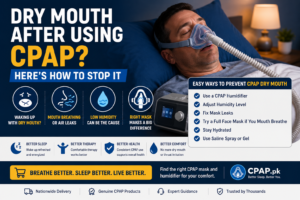
A heated humidifier, a well-fitting mask and a chinstrap (if your clinician agrees) often help. We cover this in detail in dry mouth after using CPAP.
Feeling bloated or swallowing air
Some new users notice a bloated feeling in the morning. Tell your doctor or equipment provider, as a pressure adjustment or a different machine type may be suggested. If you wonder whether a different device type is needed, see BiPAP vs CPAP: which one do you actually need.
Taking the mask off in your sleep
Many people remove the mask unconsciously during the night. Do not be discouraged. Try again the next night, check for leaks or discomfort, and keep a short note of when it happens so you can discuss it at your follow-up.
Keep the equipment clean
Wipe the mask cushion daily, wash the mask and tubing regularly and keep the humidifier water fresh. Our CPAP machine maintenance guide explains a simple routine.
Week 4: Build a lasting habit
By now many people notice they fall asleep more easily with the mask on. Aim to use your machine every night and for the whole night, including naps. Doctors usually look at nightly usage hours, so consistency is more useful than perfection. Many machines record usage and leak data, which your clinician can review at a follow-up visit.
It can help to link CPAP to an existing habit, such as brushing your teeth, and to keep the machine, mask and distilled water within easy reach of the bed. If you are still deciding on a device, our CPAP machine price in Pakistan page explains the main options.
What you might notice, and what to be realistic about
Some people feel more rested within days, while others need a few weeks. CPAP controls sleep apnea while you use it; it does not cure the condition. Benefits depend on regular use and a correctly fitted mask. Avoid comparing your progress with others, and speak to your doctor if you feel no improvement after a month of consistent use.
When to contact your doctor or provider
Call them if you have persistent skin sores, nosebleeds, ear or sinus pain, chest discomfort, severe bloating, or if you simply cannot tolerate the mask. If you were never formally diagnosed, a home sleep apnea test in Pakistan can be a convenient first step before starting therapy.
This article is for general education. Please consult a qualified doctor before starting or changing any treatment.
Frequently Asked Questions
How long does it take to get used to CPAP?
Most people adapt within two to four weeks, though some need longer. Using the machine every night and fixing fit problems early makes the process faster.
Is it normal to feel claustrophobic with a CPAP mask?
Yes, it is common at first. Try a smaller mask style, use the ramp feature, and practise wearing it while awake. Tell your provider if the feeling does not improve.
Should I use CPAP when I nap?
Yes, if you have sleep apnea, apnea events can happen during daytime sleep too, so using your machine for naps is generally advised.
Why does my mouth feel dry in the morning?
Mouth leaks or low humidity are the usual causes. A humidifier, a full-face mask or a chinstrap may help, as advised by your clinician.
What if I miss a night?
Do not worry. Simply restart the next night. Regular use matters more than one missed night.
Final thoughts
The first 30 days are about patience, small adjustments and support from your care team. Stick with it, ask for help early and your CPAP can become an easy part of your night.