
If your CPAP machine suddenly becomes louder at night, you may wonder whether the device is breaking down. A little airflow sound can be normal, but a new buzzing, whistling, rattling, or loud humming sound deserves attention.
The good news is that CPAP machine making noise does not always mean you need a new machine. In many cases, the problem comes from an air leak, loose tubing, an incorrectly fitted mask, moisture, a blocked filter, or another simple issue.
This guide explains why your CPAP machine is making noise, how to identify the source, and seven practical fixes you can try safely at home.
Important: If the machine produces a sudden mechanical grinding sound, burning smell, electrical issue, error message, or unusual motor noise that continues after basic checks, stop troubleshooting and contact your equipment provider or qualified clinician.

Why Is My CPAP Machine Making Noise?
Modern CPAP machines are designed to operate relatively quietly. A soft airflow or gentle white-noise sound can be normal. However, a sudden or unusually loud sound can indicate that air is escaping somewhere in the therapy system.
The noise may come from:
- The CPAP machine
- Mask cushion
- Mask vent
- Air tubing
- Humidifier
- Air filter
- Loose connections
- Water or condensation inside the tubing
ResMed notes that loud CPAP noise can often result from improperly connected components that allow air to escape.
Therefore, the first step is not to replace the machine. Instead, find where the sound is coming from.
1. Check Your CPAP Mask for Air Leaks
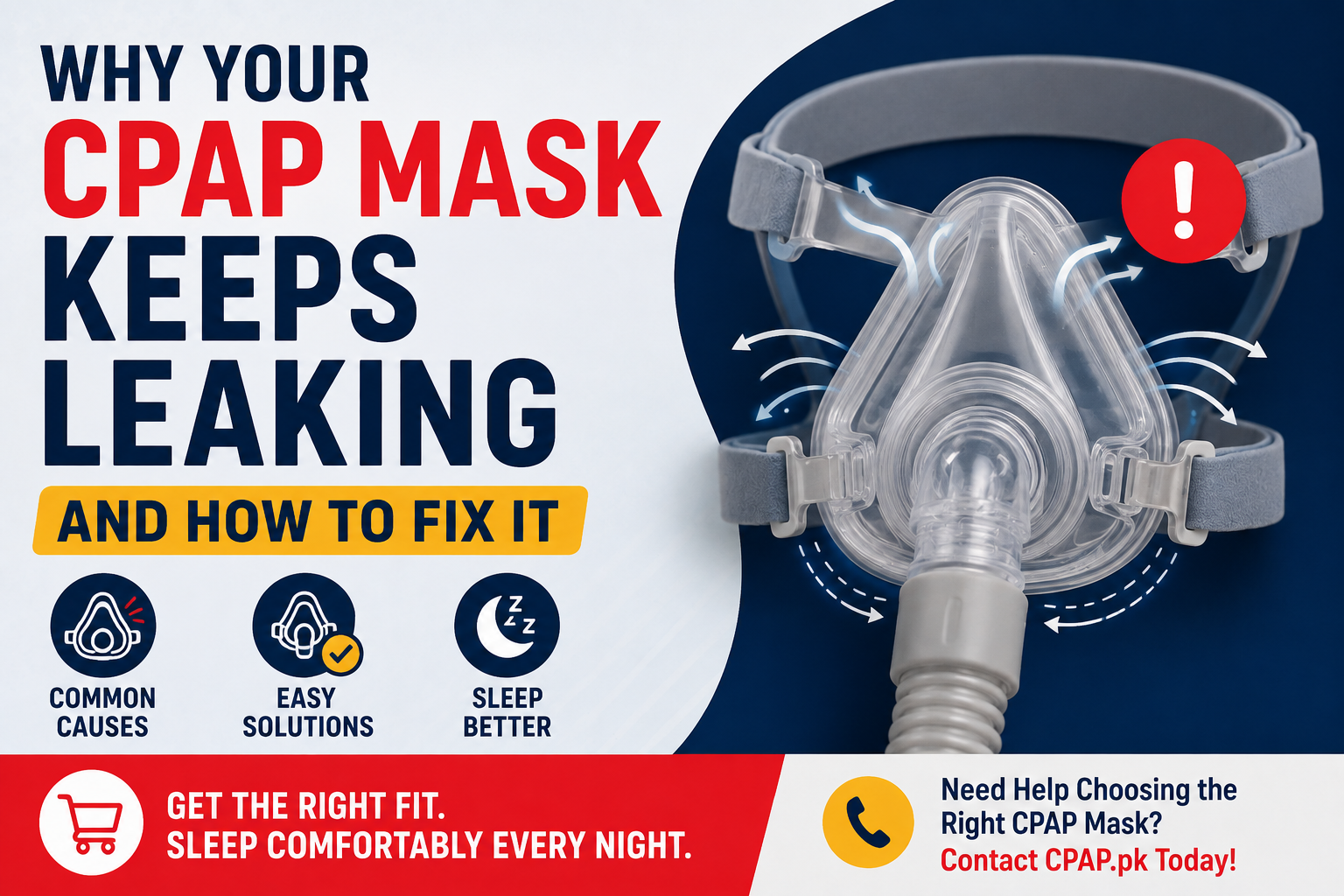
One of the most common reasons for a CPAP machine making noise is an air leak around the mask.
You may hear:
- Hissing
- Whistling
- Popping
- Air blowing toward your eyes
- A repeated “fluttering” sound
A poor mask seal can also reduce the effectiveness of your therapy.
Try this:
- Turn on your CPAP.
- Lie down in your normal sleeping position.
- Feel around the edges of the mask.
- Look for escaping air.
- Gently reposition the cushion.
- Adjust the straps slightly if necessary.
Do not immediately tighten the straps as much as possible. Over-tightening can actually distort the cushion and create another leak.
Mask leaks can result from incorrect sizing, poor positioning, worn cushions, or choosing the wrong mask style.
If your current mask no longer seals properly, replacing the cushion or choosing a better-fitting mask may solve the problem.
2. Inspect the CPAP Hose and Connections
If the mask appears fine, check the tubing.
A damaged or poorly connected hose can produce a CPAP machine buzzing noise, hissing sound, or unusual airflow noise.
Look carefully for:
- Small cracks
- Holes
- Loose connectors
- Bent sections
- Damaged rubber ends
- Condensation inside the tube
Disconnect the hose from both the machine and mask, then reconnect it firmly.
Also check whether the hose gets pulled when you move during sleep. Tube tension can move the mask and create leaks.
If you discover a hole or crack, replace the tubing rather than attempting a temporary repair.
3. Clean or Replace the Air Filter
A dirty filter can restrict airflow and may contribute to unusual machine sounds.
Your CPAP filter catches dust and airborne particles before they enter the machine. Over time, it can become clogged.
Check the filter if:
- The machine sounds different
- Airflow feels weaker
- The filter looks visibly dirty
- You sleep in a dusty environment
- Your room contains smoke, pets, or heavy airborne particles
Follow your specific manufacturer’s instructions for cleaning or replacement. Do not wash a disposable filter unless the manufacturer specifically says it is washable.
Regular inspection of filters is part of good CPAP care, and manufacturers recommend replacing worn or clogged filters according to the device instructions.
4. Check the Humidifier and Water Tub
Sometimes a CPAP machine making noise problem actually starts in the humidifier.
Water or condensation can create:
- Gurgling
- Bubbling
- Popping
- Whistling
- Wet airflow sounds
This can happen when humidified air cools inside the tubing and creates condensation, commonly called rainout.
Check whether:
- The water tub is correctly inserted.
- The chamber is properly sealed.
- There are cracks in the water tub.
- Water has entered the tubing.
- The tubing has visible droplets.
If you hear water moving through the hose, disconnect the system and allow the components to dry completely.
ResMed troubleshooting guidance also identifies moisture at mask vents and water in tubing as potential sources of noise.
If the water chamber is cracked or damaged, replace it rather than continuing to use it.
5. Refit or Replace a Worn CPAP Mask
Your mask may be the real reason your CPAP sounds louder.
Over time, silicone cushions lose their shape. Headgear can also stretch, and the frame can become less stable.
A worn mask may cause:
- Continuous air leaks
- Whistling sounds
- Poor therapy seal
- Dry mouth
- Air blowing toward the eyes
- Frequent nighttime awakenings
This is particularly important if your mask was quiet when new but has gradually become noisy.
You may need a replacement cushion, headgear, or complete mask.
When choosing a replacement, consider whether a nasal mask, nasal pillows, or full-face mask suits your breathing pattern and therapy requirements.
For people who breathe through their mouth during sleep, a full-face mask may help reduce persistent mouth leaks.
6. Check the Mask Vent
Not every airflow sound from your mask means something is wrong.
CPAP masks intentionally release exhaled air through a vent. Therefore, some airflow noise around the vent is expected.
However, a blocked or wet vent can make the mask sound unusual.
Check for:
- Water droplets
- Dust
- Blockage
- Incorrectly assembled components
- Damaged vent material
Never cover the intentional vent.
If your mask has a removable elbow or vent component, make sure it is assembled according to the manufacturer’s instructions.
ResMed’s mask troubleshooting guidance specifically identifies blocked vents, moisture buildup, and incorrectly inserted elbows as potential causes of mask noise.
7. Know When the Machine Itself Needs Professional Attention
Sometimes the noise does come from the CPAP machine itself.
A soft humming sound can be normal. However, you should take persistent mechanical noises seriously.
Contact your equipment provider if you notice:
- Grinding
- Repeated rattling
- Sudden loud motor noise
- Electrical buzzing
- Burning smell
- Error messages
- Significant changes in airflow
- Noise that continues after checking the mask and tubing
Do not open the machine yourself.
The internal motor, electrical components, and pressure-control system require professional inspection. Manufacturer troubleshooting guidance recommends servicing the unit when excessive motor noise indicates a possible component failure.
CPAP Machine Noise: Quick Troubleshooting Table
| Noise or Problem | Possible Cause | What to Check |
| Hissing | Mask leak | Refit mask |
| Whistling | Vent or small leak | Check vent and cushion |
| Gurgling | Water in tubing | Dry tubing and adjust humidification |
| Buzzing | Connection or machine issue | Check connections |
| Rattling | Loose component | Inspect machine and accessories |
| Loud airflow | Leak or restricted airflow | Check mask, tube, and filter |
| Sudden motor noise | Possible internal issue | Contact provider |
This quick comparison can help you narrow down the source before replacing expensive equipment.
How to Make Your CPAP Machine Quieter
If you’re wondering how to make a CPAP machine quieter, start with the simplest checks.
Before Bed
- Make sure the mask fits correctly.
- Check all hose connections.
- Inspect the tubing for damage.
- Confirm the filter is clean.
- Empty and refill the humidifier correctly.
- Keep the machine on a stable, flat surface.
- Make sure the air intake is not blocked.
Also, keep the CPAP machine away from objects that can vibrate against its surface.
A bedside table with enough ventilation is generally better than placing the device on soft bedding or a carpeted surface.
Does a Noisy CPAP Mean the Machine Is Broken?
Not necessarily.
A CPAP machine making noise is often caused by accessories rather than the machine’s internal motor.
For example, a small mask leak can sound surprisingly loud in a quiet bedroom. Similarly, a loose tube connection can create a high-pitched whistle.
That is why you should identify the location of the sound before assuming the device has failed.
If the sound disappears after adjusting the mask or replacing damaged tubing, the machine itself may be functioning normally.
When Should You Replace Your CPAP Accessories?
CPAP accessories experience normal wear and tear.
You may need replacements when you see:
- Cracks in tubing
- Torn mask cushions
- Stretched headgear
- Cloudy or damaged humidifier chambers
- Permanently blocked filters
- Repeated leaks despite correct fitting
Replacing worn accessories can improve comfort and reduce unnecessary noise.
It can also be more economical than replacing the entire CPAP machine.
Choosing the Right CPAP Mask Can Reduce Noise
If your current mask constantly leaks, changing the mask type or size may provide a better solution than repeatedly tightening the straps.
Common options include:
Nasal Mask
A nasal mask covers the nose and can work well for people who primarily breathe through their nose.
Nasal Pillow Mask
A nasal pillow mask uses small cushions at the nostrils and offers minimal facial contact.
Full Face CPAP Mask
A full-face mask covers the nose and mouth. It can be useful for people who breathe through their mouth during sleep or experience persistent mouth leaks.
The right choice depends on your breathing habits, facial structure, therapy requirements, and clinician’s recommendation.
Where to Buy CPAP Masks and Machines in Pakistan
If you’re replacing a noisy mask, damaged tubing, or an old machine, choosing compatible and quality equipment matters.
At CPAP.pk, patients in Pakistan can explore CPAP and BiPAP therapy products, including masks, machines, and replacement accessories.
You can also compare options when searching for:
- CPAP mask price in Pakistan
- BiPAP mask price in Pakistan
- CPAP machine mask price
- Philips CPAP mask
- CPAP machine in Lahore
- BiPAP mask price in Karachi
- BiPAP mask Karachi
- Sleep apnea pillow Pakistan
Before purchasing, confirm that the mask and accessories are compatible with your specific device and therapy.
For patients who need professional guidance, discussing mask fit and therapy settings with a qualified healthcare professional is preferable to changing prescribed pressure settings yourself.
A Simple 5-Minute CPAP Noise Check
If your CPAP suddenly becomes loud tonight, follow this order:
Step 1: Locate the noise.
Step 2: Check the mask seal.
Step 3: Inspect the hose.
Step 4: Check the humidifier for water or condensation.
Step 5: Inspect the filter and connections.
If the sound continues after these checks, contact your CPAP equipment provider or healthcare professional.
Do not attempt to repair the internal motor or electronics yourself.
Frequently Asked Questions
Why is my CPAP machine making noise at night?
Common causes include mask leaks, loose tubing, blocked vents, moisture in the tubing, dirty filters, or worn accessories. A sudden mechanical noise may require professional inspection.
Why is my CPAP machine making a whistling noise?
A whistling sound often comes from escaping air, a mask vent, loose tubing, or moisture around the vent. Check the mask seal, connections, and vent first.
Why is my CPAP machine making a buzzing noise?
A mild hum can be normal, but a new or unusually loud buzzing sound may indicate vibration, a connection issue, or an internal machine problem. If it persists, contact your equipment provider.
Can a CPAP mask cause noise?
Yes. Mask leaks and problems around the vent can create hissing or whistling sounds. An incorrect size, poor fit, damaged cushion, or blocked vent can contribute to noise.
How can I make my CPAP machine quieter?
Start by checking the mask seal, tubing, filter, humidifier, and connections. Keep the machine on a stable surface with its air intake unobstructed. If the machine itself produces persistent mechanical noise, seek professional service.
Should I replace my CPAP machine if it becomes noisy?
Not automatically. First determine whether the noise comes from the mask, tubing, humidifier, or filter. If the machine continues producing unusual motor or electrical noise after accessory checks, have it professionally inspected.
Conclusion
A CPAP machine making noise can be frustrating, especially when you’re trying to sleep. However, the problem is often easier to solve than it first appears. Start by checking for mask leaks, loose tubing, blocked vents, condensation, dirty filters, and worn accessories. If those checks do not solve the problem, avoid opening the machine and seek professional support. The right mask and properly maintained accessories can make CPAP therapy quieter and more comfortable. If you need CPAP or BiPAP masks, machines, or replacement accessories in Pakistan, explore the available options at CPAP and choose equipment compatible with your therapy.
About the Author
This article is prepared for CPAP, a Pakistan-focused provider of CPAP and BiPAP therapy equipment and sleep-related products. The content is designed to provide practical information about CPAP equipment, mask selection, maintenance, and common therapy problems. For diagnosis, pressure changes, persistent symptoms, or suspected equipment faults, patients should consult an appropriately qualified healthcare professional or their CPAP equipment provider.